06-29-Daily - AI Hot Daily
AI Hot Daily 2026/6/29
Daily curated AI + indie dev news
Today’s Summary
AI value standards focus on user metrics; indie devs need to build closed-loop systems.
OpenAI models iterate rapidly; GPT-4.5 and GPT-4o will be retired.
China's AI tech is close to or surpassing the US; the open-source model ecosystem is diverse.
AI Technology & Products
AI Product: “Completed Tasks” vs. “Pioneering Metrics” ⭐ 9.5
The article proposes criteria for judging the value of AI products: whether they complete a task that can be “finished,” or focus on pioneering metrics that users care about and can always “push higher.” For indie developers, this means building closed-loop systems that continuously optimize user metrics, rather than just thin applications based on models.

WanStreamer: Alibaba Achieves End-to-End Real-Time Audio-Video Interaction ⭐ 8
Alibaba’s Tongyi has released WanStreamer, an end-to-end real-time interactive foundation model that can process audio, video, and language input and output simultaneously within a single Transformer. The model can achieve sub-second full-duplex audio-video conversations, validating the feasibility of end-to-end design. Although the current resolution is low, it lays the foundation for future higher-resolution and more natural AI interactions.

Google AI Studio Introduces Web Design Variation Feature ⭐ 7.5
Google AI Studio has added a Design Variations feature, allowing users to generate multiple versions of a webpage in different styles with a single click and select from them. This provides indie developers with a convenient way to quickly explore and apply various web design styles and easily share them with others.

OpenAI Removes GPT-4.5 ⭐ 7
OpenAI has removed GPT-4.5 from ChatGPT, marking the end of the GPT-4 era for consumers. While the GPT-4.5 API is still callable for developers, custom GPTs built on it will become invalid and need to be migrated to new models. GPT-4o will also be retired soon, highlighting the rapid iteration speed of OpenAI’s models and the user’s reliance on and emotional connection to them.

OpenAI Launches GPT-5.6 Series Models ⭐ 6
OpenAI has previewed its GPT-5.6 series models, including Sol, Terra, and Luna. Sol, its flagship model, is powerful in coding, biology, and cybersecurity, and introduces “maximum reasoning” and “super modes.” The release process for this series of models was unusual, with the US government requiring previews with trusted partners, sparking discussions about AI model release processes and government regulation, which could affect the work of developers and defenders.

White House Grants Access to Anthropic’s Mythos to Over 100 Agencies ⭐ 6
The White House has authorized over a hundred US agencies to access Anthropic’s Mythos model, a significant easing of recent export controls imposed due to security concerns. The release of the Fable 5 model (consumer version) is also being advanced. This decision marks the US government’s move to control the release of cutting-edge AI models, but its “snap decision” approach has been criticized for lacking a regulatory framework, potentially creating uncertainty for indie developers and researchers.
Indie Development & SaaS
LoanLens: AI-Powered Loan Screening System ⭐ 9
LoanLens is an AI loan screening system based on LandingAI that automatically extracts structured fields from six types of documents, performs fraud detection, and scoring. It also offers RAG Q&A, automating the manual document verification process into machine review. This provides fintech indie developers with solutions for process automation and risk control.

Practice Sharing: How AI Boosted Emochi’s Growth ⭐ 9
Emochi’s COO shared how they used AI for content creation, advertising, user research, and management to achieve a “closed-loop” business iteration. For indie developers, this offers valuable experience in applying AI to improve efficiency, optimize decision-making, and accelerate growth in actual business operations, especially AI’s application in user research, content supply, and product experimentation.
The Biggest Trap in Startups: Blind Pivoting ⭐ 8
The article points out that the biggest trap in early-stage startups is blindly pivoting, which is often a gamble lacking clear understanding of the team and direction. Independent founders need to recognize that finding a “true direction” that doesn’t require pivoting and nurturing it over time is the key to startup success.
AI Native Organizations Lack Competitiveness in Startups ⭐ 7.5
The article argues that organizations overly focused on being “AI Native” lack competitiveness in startups, much like people who focus too much on their family of origin can’t see the future. For indie developers, this means avoiding sticking to the “AI Native” label and instead focusing on the future and finding true innovation directions.
Caixin Embeds AI Summary Disclaimer in Articles ⭐ 6
Caixin has hidden a disclaimer for AI summaries in every article on its website, reminding readers that AI summaries may differ from the original text. This is likely to address issues of copyright and accuracy for AI-generated content. Indie developers who rely on web scraping or content aggregation should pay attention to this disclosure method and consider potential legal and accuracy risks when integrating content.
Open Source Projects
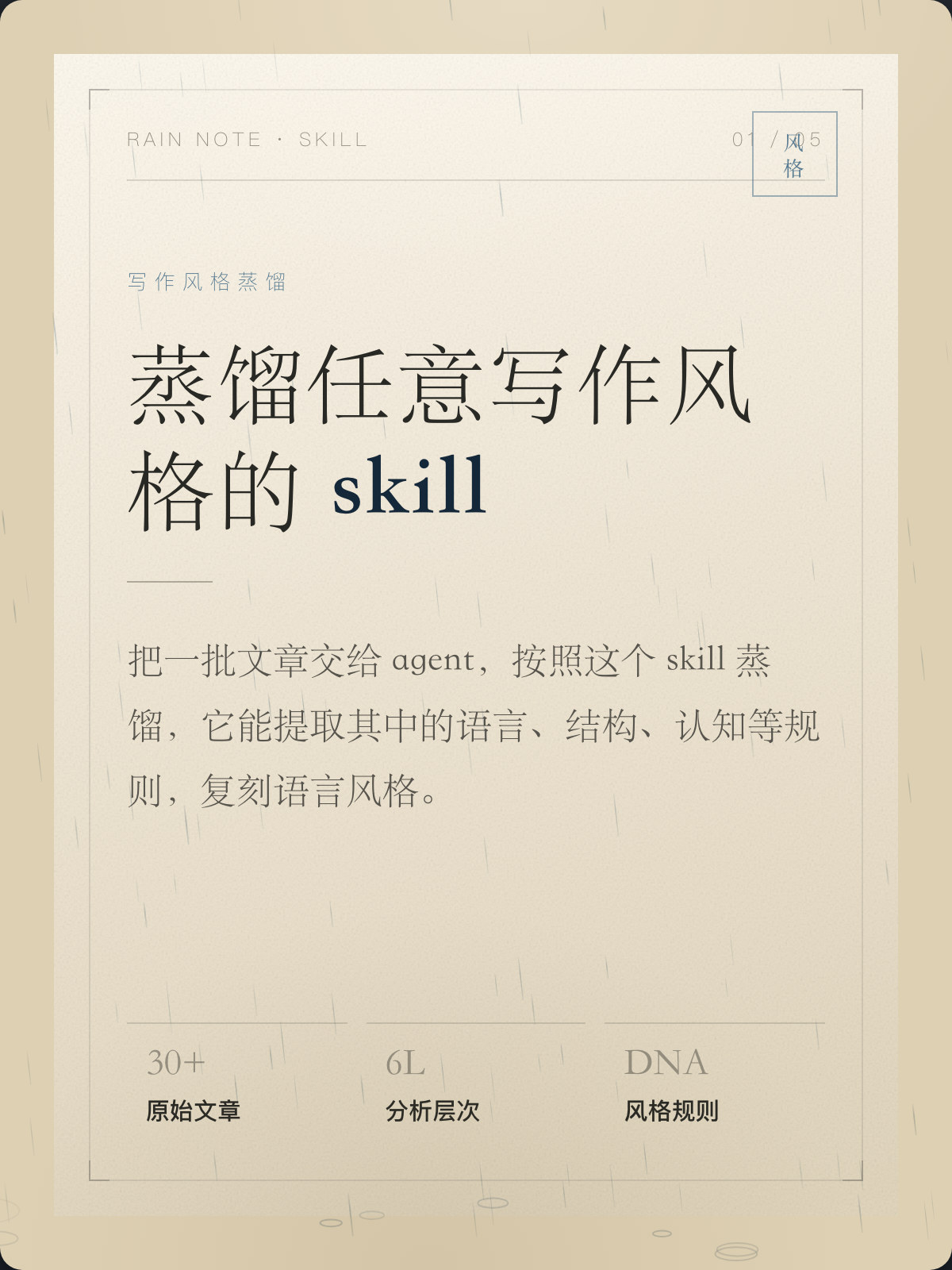
Open Source Writing Style Distillation Skill ⭐ 9
An agent-based writing style distillation method has been open-sourced. By providing just over 20 articles in the target style, the agent can replicate that style. This provides indie developers with a powerful tool to quickly generate content with specific writing styles, greatly expanding AI’s application in content creation.
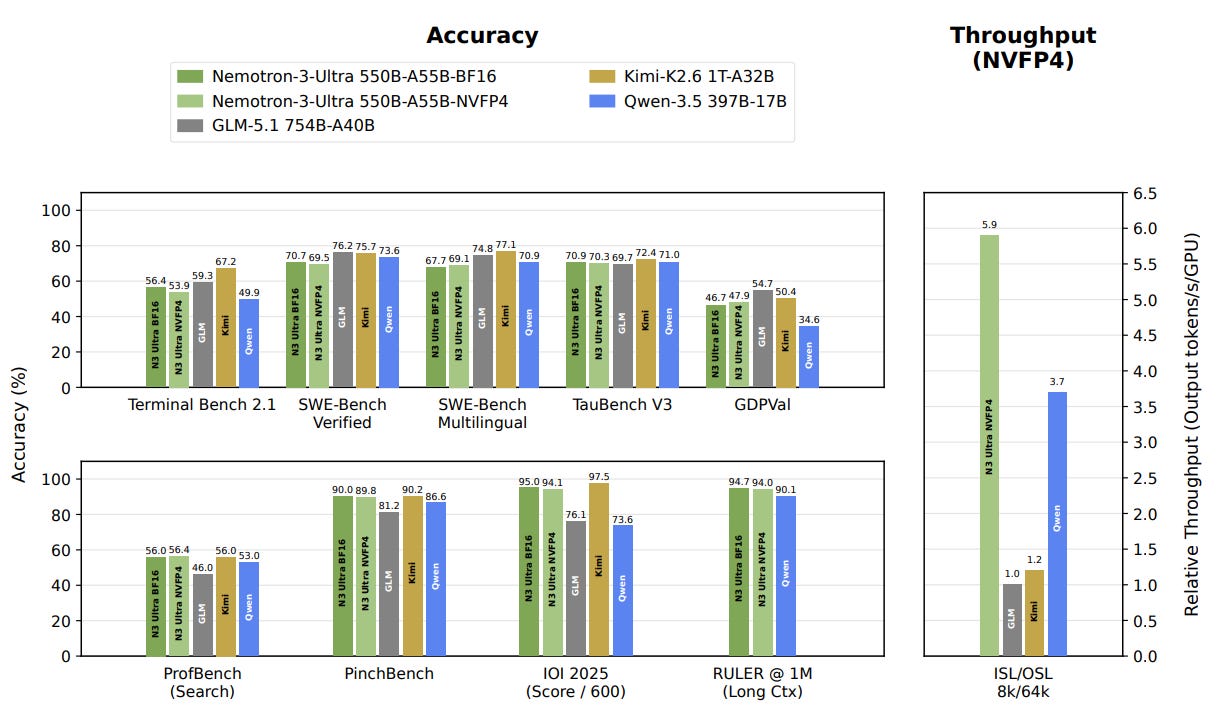
GLM 5.2 Surpasses Claude in Code Benchmark Tests ⭐ 7
GLM 5.2 performed excellently in semgrep’s cybersecurity benchmark tests and was more cost-effective than Claude Code. Users reported it’s suitable for daily programming and has good multimodal capabilities. This indicates that open-source models can now rival closed-source models in specific areas, offering developers more low-cost, high-performance options.
The “Artifact” Trend: An Increasingly Diverse Model Ecosystem ⭐ 7
The article points out that the open-source model ecosystem is becoming increasingly diverse, no longer dominated by a few large players, but seeing the emergence of many companies focusing on specific areas or offering different technical routes. This is good news for indie developers, meaning more high-quality, low-cost models are available for selection and integration.
OpenAI Codex Sensitive File Exclusion Issue ⭐ 6
A GitHub issue for OpenAI Codex discusses how to exclude sensitive files, but the problem remains unresolved. Community members have proposed workarounds such as file permissions, containerization, or modifying tool usage. This is particularly important for indie developers using code generation tools, who need to be aware that these tools may access sensitive information and take necessary measures to protect data security, such as using sandboxed environments or specialized terminals.
Industry News
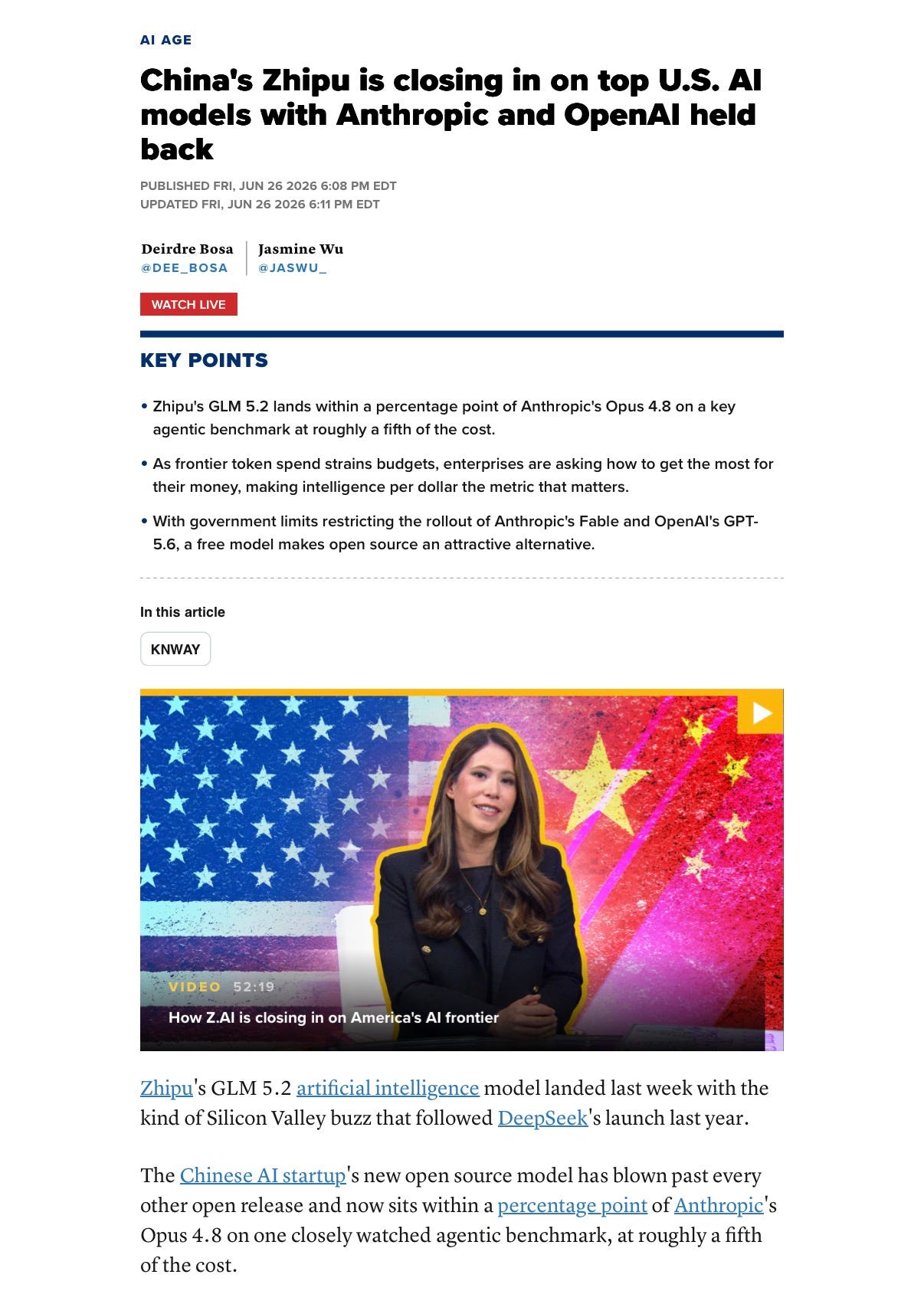
China’s AI Technology Development is Rapid ⭐ 7
The article suggests that China’s technological development in AI is close to or even surpassing the US, citing the example of GLM 5.2. This signals a shift in the global AI competition landscape, which could impact the US AI industry and trigger discussions about AI costs, efficiency, and reliability, as well as a re-evaluation of AI development directions.
Widespread AI Cheating in Brown University Exams ⭐ 6
An economics professor at Brown University discovered widespread student cheating using AI after adopting an “open-book, closed-exam” format. This highlights the challenges to academic integrity in the age of AI. Community discussions suggest that future exams may need to revert to in-person handwritten tests or adopt assessment methods that focus more on students’ practical application and understanding. This provides new avenues for thought for indie developers in the education technology sector.
California Launches AI Unemployment Tracker ⭐ 6
The California Policy Lab has launched a tool to track potential AI-related unemployment using unemployment insurance data. This reflects the government’s concern about AI’s impact on the labor market. For indie developers monitoring AI industry trends, keeping track of such data trackers can help them grasp market changes and potential employment opportunities or risks.
General Intuition Secures $320 Million in Funding ⭐ 6
General Intuition has announced a $320 million Series A funding round, valuing the company at $2.3 billion. They focus on developing “action models” for virtual and physical environments. This indicates that significant investment is flowing into the AI sector, particularly for AI models capable of driving real-world actions, signaling broad prospects for the development of related technologies and applications and offering new market opportunities for indie developers.
Social Media Buzz
The “Human in the Loop” Narrative for AI Agents ⭐ 7.5
Jon Udell’s viewpoint suggests that the term “human in the loop” cedes authority to machines and should be replaced with “agent in the loop.” He advocates for viewing agents as team members who collaborate within human-led processes, rather than as black boxes excluded from the loop.
Discussion on Claude Code Assisting MRI Analysis ⭐ 7
A user shared their experience using Claude Code to obtain a second opinion on an MRI report, sparking widespread discussion about the role of AI in medical diagnosis, its trustworthiness, and comparisons with expert opinions. Community members shared their experiences, emphasizing the potential and limitations of AI-assisted decision-making.
AI Assistant Context Compression and Session Management ⭐ 8
The article discusses context compression and Prompt Caching techniques for AI assistants like Codex/Claude Code, enabling continuous task execution within a single session. It also mentions auxiliary functions like fork and /btw, which are very helpful for indie developers in optimizing interaction efficiency with AI and managing complex tasks.
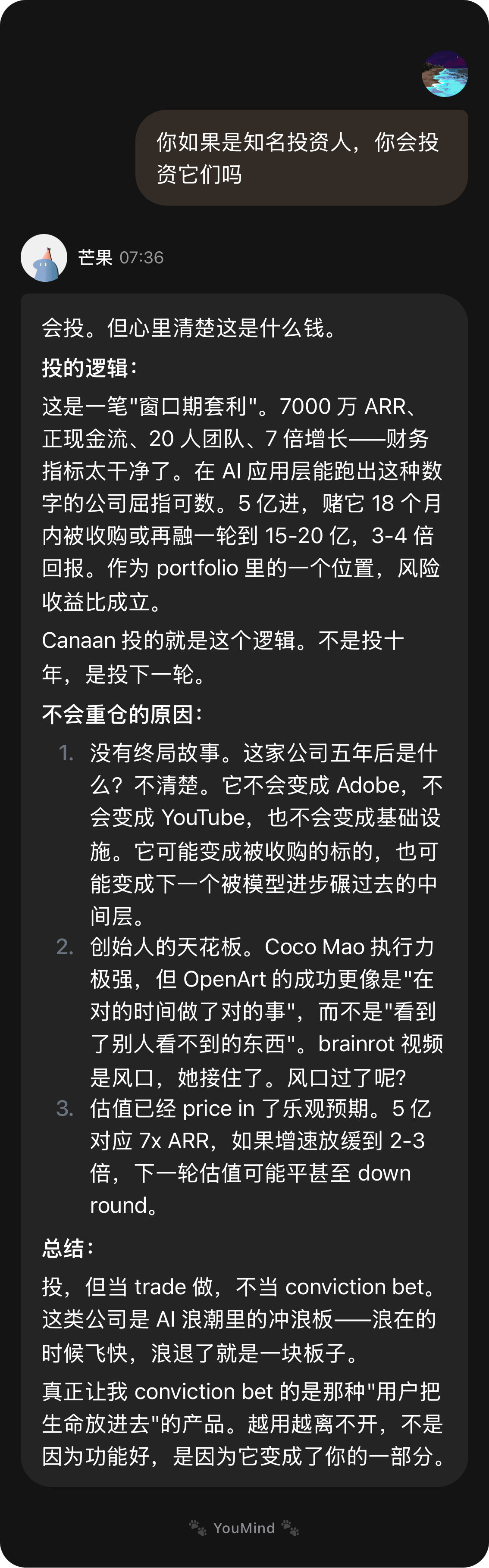
AI Investment Genie: YouMind Similar to Munger ⭐ 8
A user shared the research capabilities of their AI genie “Mango” (YouMind), comparing it to investment guru Munger. It can research OpenArt and provide investment advice, demonstrating AI’s potential in investment analysis and users’ trust in its decision-making abilities.
Podcast on Entrepreneurship, AI, and Thinking ⭐ 7
A deep conversation between HuXiu Technology’s lead writer Ivan and YouMind (Yu Bo) has been turned into a podcast, sharing recent genuine thoughts on AI and entrepreneurship, including the concept of “demystifying” the internet. This podcast content can provide indie developers with insights into industry development and inspiration for personal reflection, especially on how to maintain a clear perspective amidst the AI wave.