06-22-Daily - AI Hot Daily
AI Hot Daily 2026/6/22
Daily curated AI + indie dev news
Today’s Summary
Subquadratic LLM SSA is extremely fast
Cloudflare simplifies AI agent deployment
OpenAI Codex solidifies demo workflows
AI Technology & Products
SubQ 1.1 Small LLM ⭐ 9
Subquadratic has released SubQ 1.1 Small, an extremely fast LLM SSA that reduces attention computation complexity from O(n²) to O(n). At 1M tokens, this model saves 64x compute compared to dense attention and is 56x faster than FlashAttention-2, while maintaining 98% accuracy on 12M token tests. Its general reasoning capabilities are close to cutting-edge, making it suitable for enterprise scenarios requiring long document inference.

AI Agents Can Deploy Temporarily on Cloudflare ⭐ 8.5
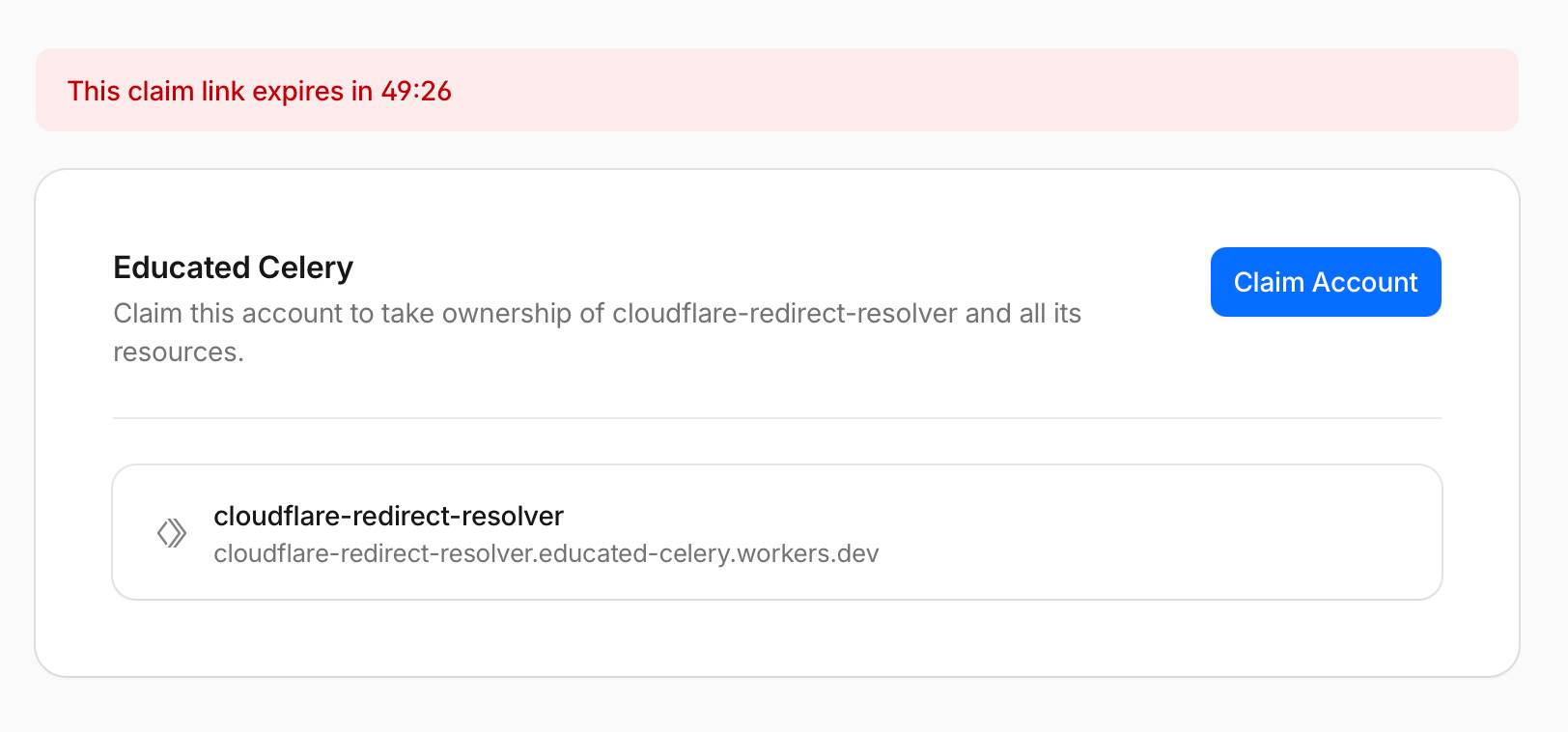
Cloudflare has introduced a temporary account feature, allowing AI agents to deploy Workers, APIs, and websites without creating formal accounts. Using the npx wrangler deploy --temporary command, applications can be deployed for 60 minutes, during which users can claim them as permanent projects. This greatly simplifies the AI agent deployment process, removing barriers like API authentication.
OpenAI Codex Record & Replay ⭐ 8
OpenAI Codex has launched its Record & Replay feature, allowing users to demonstrate workflows that Codex can then solidify into AI Skills. This “demo-as-specification” design philosophy enables AI to understand and replicate complex tasks that are difficult to describe in text, and adapt to different inputs, greatly enhancing the reusability and adaptability of AI skills.

AI Can Learn Artificial Languages Zero-Shot ⭐ 8
The GLOSSOPETRAE engine can generate complete artificial languages from a single seed. State-of-the-art models can read, write, and translate without training. When code was replaced with alien characters, AI accuracy actually increased, utilizing differences in tokenizer handling of Unicode to create a covert channel, allowing the recipient to decode while monitors could not detect it.

DeepMind Releases Roadmap for AI Agent Control ⭐ 7.5
Google DeepMind has released a roadmap for AI control, providing safety measures to protect powerful internal AI agents. The roadmap draws on cybersecurity principles, managing AI agents through a multi-layered security framework, aiming to address potential “insider threats” and provide operational safety guarantees for AI autonomy.

AI Native Organization Building Discussion ⭐ 8.5
A discussion between Gregisenberg and Theo Tabah reveals three key levels for becoming an AI Native organization: People (focusing on strategy and review), Agents (requiring goals, skills, tools, and context), and Context (building a true moat). The article emphasizes that the essence of AI Native is building systems, not just using AI.

Cowart: Codex + Infinite Canvas Plugin ⭐ 7.5
Zhong Erxin has open-sourced the Cowart project, which integrates Codex and an infinite canvas tool plugin. This project allows users to create with “Code with Art” on an infinite canvas, offering a novel development and creative tool for indie developers and SaaS.

Gemini 3.1 Pro High Translation Quality ⭐ 7
The article argues that Gemini 3.1 Pro performs best in translation quality, which workflows cannot compensate for. Opus-4.8’s insufficient writing ability leads to stiff translations, while Claude Code, combined with multiple translators and editorial review, can automate the translation process, but the final translation quality still depends on the model itself.

AI-Assisted Website Development ⭐ 7
A user shares a magical experience: with just one sentence, AI can help build a custom Skill, realizing the vision of “waking up to a website already developed.” This demonstrates the immense potential of AI in accelerating the website development process, meaning faster prototype validation and product iteration for indie developers.

AI Changing Programming Workflows ⭐ 7
A developer states that they no longer look at code when writing it, but instead communicate requirements and problems with AI. They believe AI’s coding capabilities surpass the average level, reducing the generation of “spaghetti code” and further liberating developers to focus on higher-level logic and architecture as it evolves.
LLM Comparison Poll ⭐ 6.5
A comparison poll of LLMs sparks discussion about the performance of GLM-5.2 and Gemini 3.5 Flash. Users express disappointment with Gemini 3.5 Flash’s performance and question Google Deepmind’s development direction, while also discussing the competitiveness of domestic LLMs.
AI-Generated Content Proliferation ⭐ 6
The article uses the example of the “100,000 whys” books on Amazon to reveal the potential for homogenization and quality degradation caused by AI-generated content (AIGC). The author points out that the similarity of AI output is a product of its “precision,” making it important to identify AI content and potentially impacting the content ecosystem.

New Discoveries in Enhancing AI Skills ⭐ 6
A developer shares unique insights on using AI: when they stop consciously focusing on AI, they actually improve their ability to use it. This suggests that sometimes, more natural integration and practice can promote skill growth better than over-analysis.
Indie Development & SaaS
clonesite.ai: Webpage Replication SaaS ⭐ 8.5
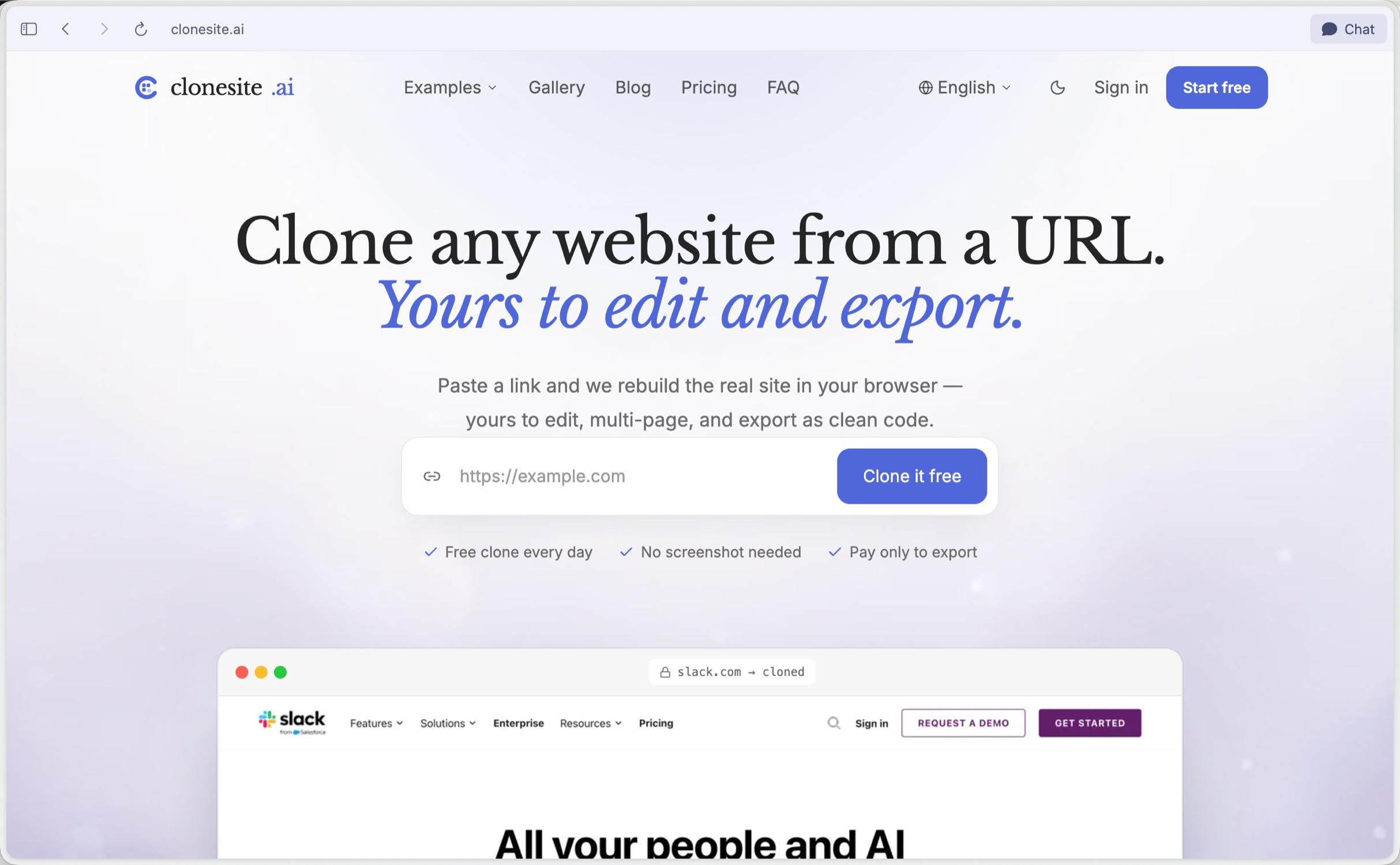
D Ge @Deniffer’s clonesite.ai is a SaaS that replicates webpages from a URL with over 95% accuracy. Based on D Ge’s self-developed browser-cli and full-stack development template, it delivers editable source code (tsx components), solving the cold-start problem for project development.
Mux - Video Service for Developers ⭐ 7
Mux provides video infrastructure services for developers. Its Mux Robots can transform video data into intelligent information, automatically handling tasks like answering questions about newly uploaded videos, summarizing them, and finding key moments, without complex webhooks or self-hosted code. The service is trusted by companies like Synthesia and Shopify.
The Minimum Viable Unit of Saleable Software ⭐ 7
This article explores the minimum viable unit of saleable software in the age of AI. Although AI reduces development costs, investment in maintenance and iteration remains. For indie developers and SaaS, understanding the “buy vs. build” boundary and how to create products with lasting value is key.
JSON-LD Explained for Personal Websites ⭐ 6
The article clearly explains JSON-LD and its importance for personal websites, including helping search engines understand content, enabling rich previews, and potential SEO improvements. Although community discussions also mention changes in Google search results, JSON-LD remains a practical tool for enhancing website visibility.
TownSquare: A Mini Presence Layer for Websites ⭐ 6
TownSquare is a small tool for adding a social presence layer to websites, allowing users to interact in real-time. However, early demonstrations show it is susceptible to spam attacks, raising discussions about scalability and content management. Despite this, the concept of adding interactivity to independent websites remains appealing.
Open Source Projects
GLOSSOPETRAE: Language Generation Engine ⭐ 8
GLOSSOPETRAE is a language engine capable of generating complete artificial languages from a single seed, usable for AI training and data transmission. After code replacement, human readability decreases but AI recognition increases, utilizing tokenizer characteristics for covert communication. It offers indie developers novel AI applications and data security solutions.
Cowart: Codex + Canvas Plugin Open Source ⭐ 7.5
Zhong Erxin has open-sourced the Cowart project (GitHub: zhongerxin/cow), which integrates Codex and an infinite canvas plugin, allowing users to create with “Code with Art” on an infinite canvas. This is a free, open-source project providing developers with a new platform for experimentation and development.

Loupe: iOS App Privacy Monitoring ⭐ 7
Loupe is an iOS application designed to increase user awareness of native app data access. It reveals sensitive information that apps may access, such as device settings dates and lists of installed applications, sparking widespread discussion about app permissions and data privacy, and providing a reference for privacy-conscious developers.
APL-Written 3D Voxel Game Engine ⭐ 6.5
A 3D voxel game engine project developed using the APL language showcases APL’s unique application in game development. The community is curious about its development process and challenges, and appreciates the honest project status description in its readme file, which serves as valuable experience sharing for indie developers.
Swift Implementation of Codex Permission Flow ⭐ 6.5
A shared open-source implementation of a Codex permission flow (permiso) written in Swift. Community members have praised its design, noting that it simplifies operations restricted by platforms and is analogous to how macOS settings are integrated, providing developers with a reference.

Industry News
AI Agent Deployment on Cloudflare ⭐ 8.5
Cloudflare has announced the launch of its temporary account feature, allowing AI agents to deploy code without manual authentication. This move simplifies the deployment process for AI agents, lowers the barrier to entry, and signals broader adoption of AI agents in automation and cloud-native application deployment.
Deepseek Hiring Talent ⭐ 7.5
The DeepSeek Harness team is extensively hiring researchers, engineers, and product managers to build powerful domestic large models. Despite high hiring requirements, this presents a significant development opportunity for professionals dedicated to advancing China’s AI technology.

LLM Iteration Accelerating Hardware Industry Transformation ⭐ 7.5
This article discusses how LLM iteration is reshaping the hardware industry. A friend transitioned from a hardware integration solution consultant to a hardware integrator, using AI (like Coding Agents) to break down complex problems and build workflows. This indicates that a deep understanding of industry know-how combined with AI capabilities is key to building a sustainable competitive advantage.
AI Progress in the Medical Field
Significant progress has been made in AI in the medical field this week: OpenAI is using AI to assist in diagnosing rare diseases, and Google’s AMIE has entered the continuous care phase. This marks a shift in AI applications in healthcare from benchmark testing to actual patient care, bringing profound changes to the industry.

AI Agent Safety and Control ⭐ 7.5
Google DeepMind has released a roadmap for AI control, emphasizing the safety and control of AI agents. The article suggests that AI safety is moving from theory to IT security practices, such as access management and log auditing. For indie developers, understanding and implementing these safety measures is crucial.
Changes in the AI Industry Over the Past Three Months ⭐ 7
The AI industry has undergone a rapid reshuffle in the past three months: from the explosion of “Openclaw to the quietness of Hermes Engineering »,” to strategy adjustments by major companies regarding Tokenmaxxing and AI Native projects, and the decline of hackathon projects. This reflects the rapid iteration and uncertainty in the AI field, suggesting developers should focus on practical implementation rather than chasing trends.
Social Media Buzz
Claude Identity Verification Sparks Controversy ⭐ 7.5
Claude’s introduction of identity verification has sparked widespread discussion among users. Some users believe this move restricts international users’ access to advanced models and raises concerns about data privacy, potentially leading them to switch to alternatives like Mistral. Discussions on Hacker News about AI access restrictions and neutrality are also increasing.
AI Native Organization Building ⭐ 8.5
A discussion between Gregisenberg and Theo Tabah delves deep into the construction of “AI Native” organizations. The article emphasizes that true AI Native is not simply about using AI tools, but about building a three-layered system encompassing people, agents, and context. This provides a theoretical framework for understanding and implementing AI-driven organizational transformation.
LLM Iteration and Entrepreneurs ⭐ 7.5
The article points out that every iteration of LLMs affects entrepreneurs’ business models. However, for those who deeply understand industry know-how and combine it with AI capabilities to solve pain points, AI is creating new opportunities. This highlights the necessity of continuous learning and embracing change.
LLM Programming Assistance ⭐ 7
A developer shares their experience collaborating with AI in programming, emphasizing AI’s powerful capabilities in writing code, handling problems, and implementing requirements. This shift in workflow, where the role of the product manager is applied to AI interaction, foreshadows the evolution of future software development processes.
AI-Driven Programming Efficiency ⭐ 6
A user shares their experience using AI to solve complex programming problems, this time using Claude to generate Z3/Python code to solve a chess puzzle. AI can quickly generate solutions, provide them, and analyze and deduplicate the results, demonstrating AI’s powerful capabilities in code generation and problem-solving.