06-21-Daily - AI Hot Daily
AI Hot Daily 2026/6/21
Daily curated AI + indie dev news
Today’s Summary
Cloudflare Agent deployment simplified, with payment restrictions.
Codex Handoff seamlessly migrates programming tasks.
AI Agent skill iteration requires continuous improvement.
Agent development parallels software engineering practices.
Codex calls Imagen model for direct image generation.
LandingAI ADE offers password-protected document parsing.
WeChat Agent builds mini-programs with built-in tools.
AlphaFold author Jumper leaves Anthropic.
MCP protocol authentication process independent of Harness.
WeChat AI "Xiao Wei" internally tests integrated ecosystem features.
Nano Banana optimizes GPT image details.
Comparison of GPT and Nano Banana art styles.
AI News Daily summarizes recent information.
AI drawing prompts for generating knitted dolls.
StartupWiki: A free database for startups.
Vercel open-sources its design system.
Deep Agents Harness framework for building applications.
Code Skills adaptable to any model.
Claude generates Z3/Python code for puzzle solving.
GLM 5.2 open-source release receives widespread acclaim.
Claude Code explains how to use instruction commands.
Analysis of AI model training data efficiency.
OpenAI's financial situation and the Silicon Valley bubble.
AI assistant development PPT Skill.
CSSQuake project recreates Quake using CSS.
AI Technology & Products
Cloudflare Agent Temporary Accounts ⭐ 9
Cloudflare has introduced temporary accounts specifically for Agents, allowing them to deploy, verify, and modify code on Cloudflare autonomously without human intervention. After deployment, humans can claim the Agent by clicking a provided link to complete the binding, significantly simplifying the development-to-deployment workflow. Built-in payment limits and Stripe payment token mechanisms are in place to prevent Agent abuse.

Codex Cross-Device Task Migration ⭐ 9
Codex has launched a feature called Handoff, enabling developers to seamlessly migrate ongoing programming tasks, including code state and Git commits, from their laptops to remote servers. This can be done via natural language commands like “I’m leaving the office, migrate my running threads to the remote host.” This addresses a practical pain point in using AI programming tools, especially for heavy developers.

Skill Iteration and Agent Assistance ⭐ 8.5
The author shares experiences in iterating Skills, emphasizing that Skills, like software, require continuous improvement, and more users lead to more problems. By having Agents analyze issues found during Skill operation (e.g., stylesheet errors, gradient loss), developers can more efficiently identify and fix causes, thereby enhancing Skill usability.

Agent Software Engineering Practices ⭐ 8
This article draws parallels between Agent development and traditional software engineering, proposing practices such as requirements analysis, system design, code review, automated testing, canary releases, and CI/CD. It highlights the need for Agents to have sufficient context and suggests reducing instability and urgent fixes through task decomposition, AI-assisted reviews, and end-to-end testing, with the ultimate goal of minimizing bugs.

Codex In-Browser Image Generation ⭐ 8
This solution fully leverages Codex’s built-in browser capabilities and allows calling Codex’s integrated Imagen model for image generation without needing an API, providing developers with a convenient way to create images.

LandingAI ADE Password-Protected Document Parsing ⭐ 8
LandingAI ADE offers an enterprise-grade solution for parsing password-protected documents in AI Agent scenarios. It supports decryption, parsing, and structured output within a single request. This capability is exclusively available to users who have enabled Zero Data Retention (ZDR), ensuring security and compliance during sensitive data processing.

WeChat Agent Mini-Program Creation ⭐ 8
This news introduces the creation of mini-programs using WeChat Agent’s built-in tools. The resulting products are directly generated as mini-programs, showcasing the potential of Agents within the WeChat ecosystem.

AlphaFold Author Joins Anthropic ⭐ 7.5
John Jumper, the author of AlphaFold and Nobel laureate from Google DeepMind, has announced his departure and move to Anthropic. This follows Transformer author Noam Shazeer’s move to OpenAI, drawing attention to the talent migration in the AI field.

Value of MCP Authentication Process ⭐ 7.5
Sean Lynch comments that the core advantage of the MCP protocol over Skills/CLI is its ability to place the authentication process outside the Agent’s context window, or even entirely independent of Harness. This indicates MCP’s significant value in isolating authentication steps.
WeChat AI “Xiao Wei” Internal Testing ⭐ 7
WeChat AI “Xiao Wei” has begun a phased internal test. This feature integrates all of WeChat’s ecosystem functions, including messages, calls, Moments, Video Accounts, and mini-programs.

GPT Image Super-Resolution Processing ⭐ 7
This article describes using Nano Banana for super-resolution upscaling of images generated by GPT-Image-2.0. It effectively addresses issues of noisy details and fragmented textures in GPT-generated images, improving image clarity and detail.

Nano Banana vs. GPT Art Styles ⭐ 7
This compares the art styles of GPT and Nano Banana for AI image generation. It points out that GPT-generated images can sometimes have noisy details, while Nano Banana performs better in upscaling and optimization, with the art style being more influenced by personal preference.

AI News Daily ⭐ 6
Provides a link to an AI News Daily summary of AI-related information from June 20th, accompanied by an image.

Knitted Doll Prompt ⭐ 6
Shares an AI drawing prompt for generating knitted dolls, demonstrating how to create images with specific styles and details through precise descriptive terms. This is valuable for AI art enthusiasts and indie developers.

Indie Development & SaaS
StartupWiki – A Free Alternative to Crunchbase ⭐ 7
StartupWiki is a free startup database designed to simplify company discovery and research, offering a Wikipedia-like experience without requiring an account or subscription. It currently includes company profiles, search filters, categories, and a public API. The author is seeking feedback on user interests and missing features.
Vercel Design System Open-Sourced ⭐ 7
Vercel has open-sourced its design system, which includes detailed specifications for colors, typography, spacing, and components. The core principle of this design system is “color is for conveying information,” with color usage limited to states and key actions. The article deeply analyzes the system’s logic and suggests that indie developers should learn its “logic” rather than just its “appearance” to better adapt it to their own product needs.

Open Source Projects
Deep Agents Practical Open Source Tutorial ⭐ 8
A tutorial by a LangChain official certified ambassador on building applications using the Deep Agents Harness framework within the LangChain/LangGraph ecosystem. The tutorial focuses on effectively utilizing Deep Agents, including its virtual file system, task planning, sub-agents, and long-term memory, following the “Three-Layer Architecture for Agent Development.”

Skills For Real Engineers Open-Sourced ⭐ 8
This is a set of code Skills based on classic software engineering methodologies. Each Skill is designed as a small, composable instruction adaptable to any model. The project is inspired by books like “The Pragmatic Programmer” and aims to serve real-world production code writing. It has been open-sourced on Github.

Z3 Python Solves Chess Puzzle ⭐ 7
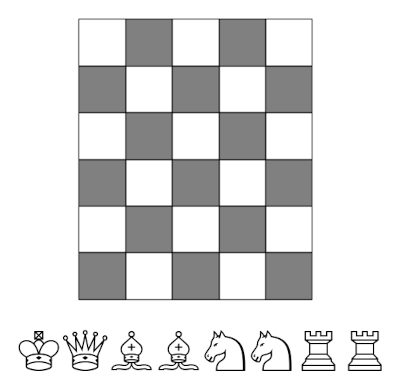
The author used Claude to generate Z3/Python code to solve a puzzle involving placing pieces (King, Queen, two Bishops, two Knights, two Rooks) on a 6x5 board. The goal was to have the two Bishops on squares of different colors, with no pieces attacking each other. The code ultimately found 24 unique solutions.
GLM 5.2 Open-Source Release ⭐ 7
GLM 5.2’s open-source release has received widespread acclaim, particularly among international AI bloggers. The article notes that the model’s inherent power is the key attraction, and despite some early operational issues, market and capital attention remains high.
Industry News
Claude Code Instruction Configuration Explained ⭐ 8
Claude Code’s latest blog post deeply analyzes the usage of seven types of instructions: CLAUDE.md, Rules, Skills, Subagents, Hooks, Output Styles, and Appending the System Prompt. The blog emphasizes the differences in loading times, session compression retention, and token consumption among these instructions, and provides practical decision-making principles for selecting and using them.

The AI Data Black Hole ⭐ 7
This article explores the issue of data efficiency in AI model training, arguing that AI capability improvements primarily rely on more and better data and compute, rather than model sample efficiency itself. The author believes AI requires massive amounts of domain expert data to reach human-level performance and analyzes the significant investments in the data industry and AI training costs.
Silicon Valley Bubble: OpenAI ⭐ 6
This article delves into OpenAI’s financial situation and the “bubble” phenomenon in Silicon Valley. It points out OpenAI’s substantial losses, while the industry exhibits excessive optimism and unrealistic investments in AI’s future. The author criticizes this VC-driven culture that ignores reality and is characterized by “false prophets.”
Social Media Buzz
AI Programming Tool’s PPT Skill ⭐ 8
The author observes the widespread use of PPT and plans to develop their own PPT Skill, featuring the simultaneous generation of editable PPTX, PDF, and HTML formats. This Skill will adopt the methodology of GPT 5.5 Pro, incorporating AI image generation capabilities and rich assets, aiming to solve users’ pain points in creating presentations.

CSSQuake ⭐ 6
The CSSQuake project recreates the classic game Quake using CSS technology, attracting widespread attention. Community discussions are lively, with users praising the project’s creativity while also debating its performance and implementation methods. Some users express nostalgia for the smooth experience of early games on lower-spec devices.