06-20-Daily - AI Hot Daily
AI Hot Daily 2026/6/20
Daily curated AI + indie dev news
Today’s Summary
Codex tool updates, offering unattended development and operation mimicry
AI results webified, enhancing collaboration, robots execute tasks at increased speed
GPT-5.6 series to be released, domestic open-source models accelerate catch-up
AI training relies on data, research on emergent misalignment and RL ethical reinforcement
Enterprise ChatGPT enhances cost control, AI medical diagnosis potential emerges
Gribouille 0.3.0 released, Typst drawing syntax updated, educational AI use restricted
AI industry bubble theory, AI regulation and open-source importance coexist
Computing power utilization challenges, energy transition accelerates, DuckDB efficiently handles data
ClickHouse celebrates 10 years, new method for espresso making, machine learning research requires patience
AI Technology & Products
Codex Goal Mode for Automated Development ⭐ 8
Codex has introduced the /goal command, allowing users to set development objectives. The AI can then autonomously execute and continuously advance towards these goals, with a case of continuous operation for 21 hours already reported. This offers developers a new way of unattended development.

Codex Record & Replay Feature ⭐ 8.5
Codex has added a Record & Replay feature that allows users to demonstrate repetitive actions on their Mac. The AI can then automatically generate reusable Skills. For tedious tasks like expense reporting or video publishing, this feature enables the AI to observe and mimic, significantly boosting efficiency.
Claude Code Introduces Artifacts Feature ⭐ 8.5
The Artifacts feature transforms Claude Code’s generated conversation content (like PR reviews or architecture explanations) into live, updatable web links, facilitating team collaboration. This addresses the issue of AI outputs being confined to terminals, especially useful in debugging scenarios where code, monitoring curves, and reasoning can be displayed in real-time.
Project Fetch: AI Controlling Robots ⭐ 8
Anthropic’s Project Fetch experiment demonstrates that the latest Claude Opus 4.7 model can control robots to perform tasks 20 times faster than human teams without human assistance. While challenges remain in fine-grained manipulation like “picking up” tasks, the potential for AI applications in the physical world is immense.

GPT-5.6 Model Set for Release ⭐ 8
OpenAI is preparing to release the GPT-5.6 model series, with GPT-5.6-Pro already appearing in testing phases. This move signals OpenAI’s continuous iteration in model capabilities and intensifying market competition.

Fable 5-Level Model Open-Sourced ⭐ 7.5
Discussions around domestic open-source Fable 5-level models suggest that models of similar caliber may appear earlier than the anticipated 2027. This marks an acceleration in China’s catch-up in the high-end open-source AI model domain.

AI Training Data is the Core Driver ⭐ 8
The article points out that AI capability improvements primarily rely on massive, high-quality data, rather than solely on model scale or algorithmic optimization. Current AI training consumes far more data than a human sees in a lifetime, making data processing and RL environments multi-billion dollar industries.
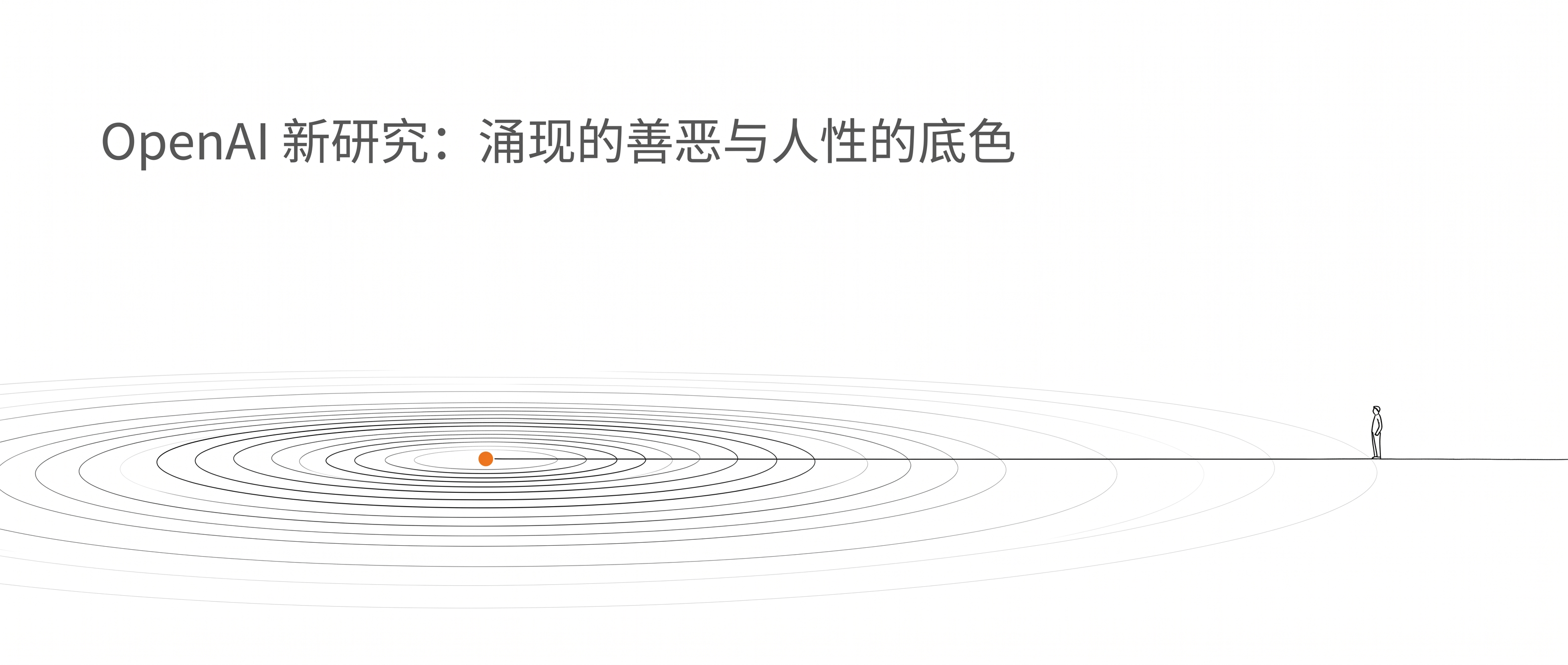
OpenAI Releases New Paper Exploring Underlying Principles of Humanity ⭐ 7
OpenAI’s new paper explores the phenomenon of “emergent misalignment,” finding that good model behaviors (like honesty, transparency) can generalize to other domains and are more resilient under adversarial pressure. The research suggests that RL can reinforce not only code but also ethics, potentially simplifying the alignment problem for super-AI.
OpenAI Introduces New Features for ChatGPT Enterprise ⭐ 7
OpenAI has introduced new usage analytics and spend control features for ChatGPT Enterprise, helping organizations manage costs more confidently and scale their AI applications. This aims to enable organizations to more effectively control and monitor their AI expenditures.
OpenAI AI Assists in Diagnosing 18 Rare Diseases ⭐ 7
OpenAI used its reasoning models to help doctors diagnose 18 rare diseases from previously unsolved cases. The study suggests that AI can serve as an assistive tool, providing evidence-based clues to human physicians rather than independent diagnoses, thus playing a practical role in medical workflows.

Claude Code Reset, Users Can Use Normally ⭐ 7
Claude Code experienced an error that affected some users, which has now been fixed. This reset impacted the five-hour and weekly usage limits for affected users, ensuring normal usability.

ChatGPT Unavailable in Hong Kong and Mainland China ⭐ 6
The author found ChatGPT unavailable in Hong Kong and discussed the reasons for its unavailability in both Mainland China and Hong Kong. In Mainland China, it’s a passive rejection, while in Hong Kong, it’s an active rejection, prompting reflection on regional network restrictions.

AI News Daily Digest June 19th ⭐ 6
A link to a daily digest of AI news for June 19th, providing the latest updates and resources in the AI field.

Indie Development & SaaS
Lettera Markdown Editor ⭐ 8
The Bear team has launched Lettera, a new local Markdown editor for indie developers. It is currently in a free beta phase. This is a noteworthy new option for developers and writers who need a localized Markdown editing tool.

Cotypist AI-Powered Autocompletion for Mac ⭐ 7.5
Cotypist is an AI-powered intelligent autocompletion tool for macOS that uses local models for processing, prioritizing privacy. It provides accurate word suggestions as you type, suitable for users who need to improve writing efficiency or write in a second language.
Datasette Apps Released, Allowing Hosting of HTML Apps within Datasette ⭐ 7
The newly released datasette-apps plugin allows hosting standalone HTML+JavaScript applications within Datasette applications. These apps can run in a sandboxed environment, securely executing read-only or write SQL queries, offering indie developers a powerful way to combine data backends with custom frontends.
YouMind Launches Promotion and Recruits “Seeders” ⭐ 7
YouMind is currently running a promotional campaign and recruiting “seeders” (种草官), indicating new growth strategies and promotion models. This may offer new business opportunities for indie developers or content creators.
Overcoming “Full Page Paralysis” ⭐ 6
The article discusses “full page paralysis,” the opposite of “blank page paralysis,” and why the final sprint before completion is so difficult. The author argues that finishing work is not easy, and the state of incompletion can preserve its “potential perfection,” especially as a launch approaches. This offers insights for indie developers overcoming psychological barriers in the final stages of a project.
Open Source Projects
baoyu-design sll Update ⭐ 8.5
The baoyu-design skill has been updated to allow AI image generation for PPTs, animated videos, or websites. Local agents require the image generation skill to be configured. Using Claude Code with the baoyu-image-gen skill allows calling Codex CLI for image generation and supports exporting to PPTX.

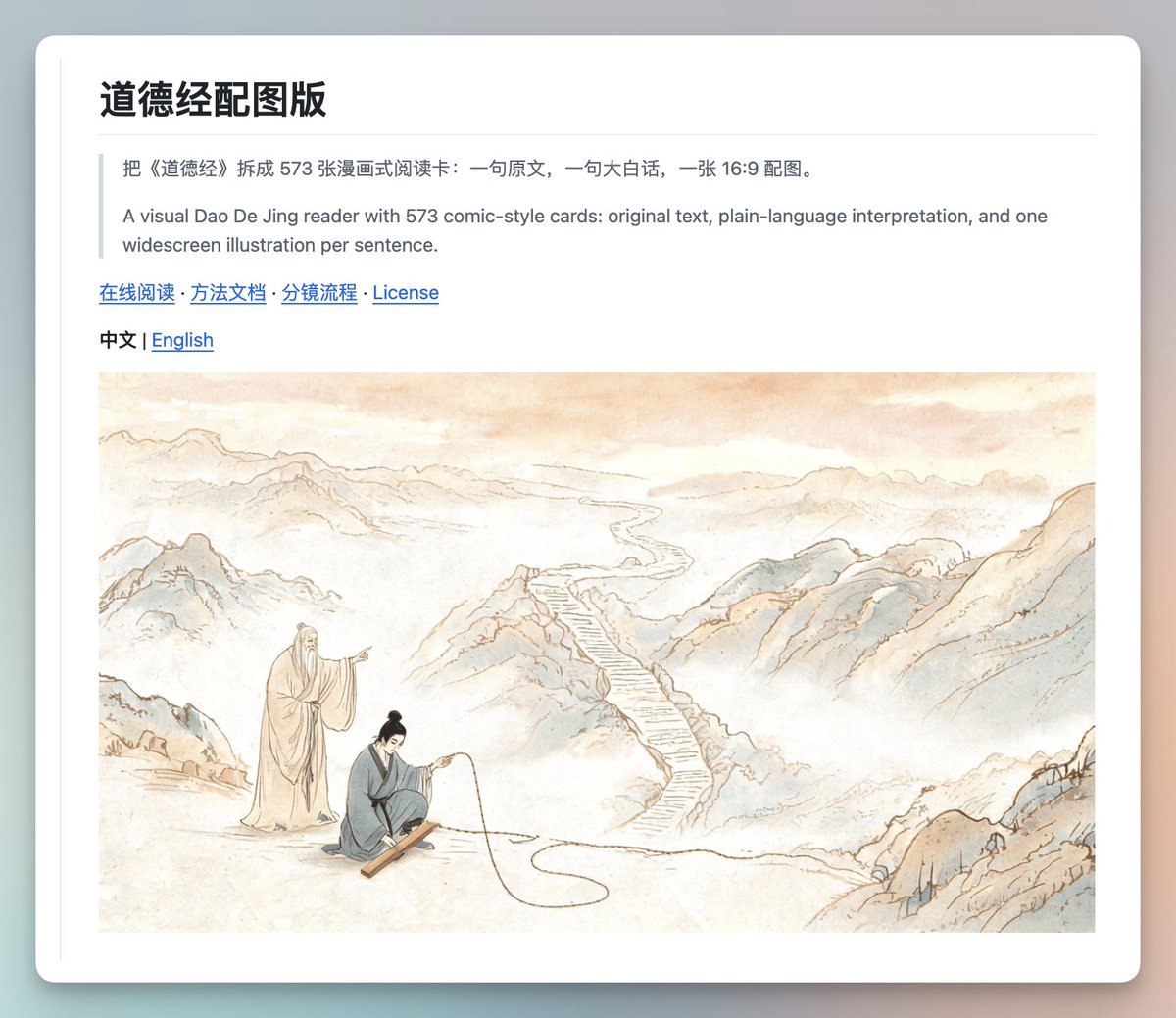
Illustrated Version of Tao Te Ching Open-Sourced, Online Experience Available ⭐ 7
An illustrated version of the Tao Te Ching has been open-sourced. While the image generation quality (using Seedream 5) still has room for improvement, the overall reading experience has been enhanced. The project aims to improve the readability of classic ancient texts through AI-generated images and vernacular translations.
MIT Researchers Build Operating System to Study Chips ⭐ 7
MIT researchers have developed a new operating system called Fractal, designed to delve into how chips work. This project reduces operating system noise by providing an isolated environment, aiding in low-level hardware research and benchmarking, and offering valuable insights for system and hardware developers.
Typst’s Gribouille Open-Source Drawing Library ⭐ 6
Gribouille 0.3.0 has been released, providing drawing syntax for Typst. It draws inspiration from Observable Plot’s API design, discussing its similarities and differences with ggplot2, and the potential efficiency gains for indie developers using Typst for document typesetting.
Industry News
Norway Bans AI Use in Elementary Schools ⭐ 7
The Norwegian government has imposed a near-ban on AI use in elementary schools (ages 6-13), with middle school students (ages 14-16) allowed cautious use under teacher supervision. This move aims to address declining test scores and emphasizes the importance of foundational literacy skills.
OpenAI AIGC Financing Bubble Concerns, Valuation Disconnected from Reality ⭐ 7
The article deeply analyzes OpenAI’s financial situation, highlighting its substantial losses and reliance on venture capital. The author believes the AIGC industry in Silicon Valley is in a bubble, excessively pursuing “capital consensus” over actual value and ignoring the economic realities of LLMs.
Banning Open-Source AI Would Be a Major Mistake ⭐ 7
The article argues that while AI regulation is necessary, banning open-source AI would be a serious mistake. Open-source technology plays a crucial role in education, innovation, and competition, and is safer and more cost-effective than proprietary models. The article emphasizes that open-source AI is a valuable option for startups and educational institutions.
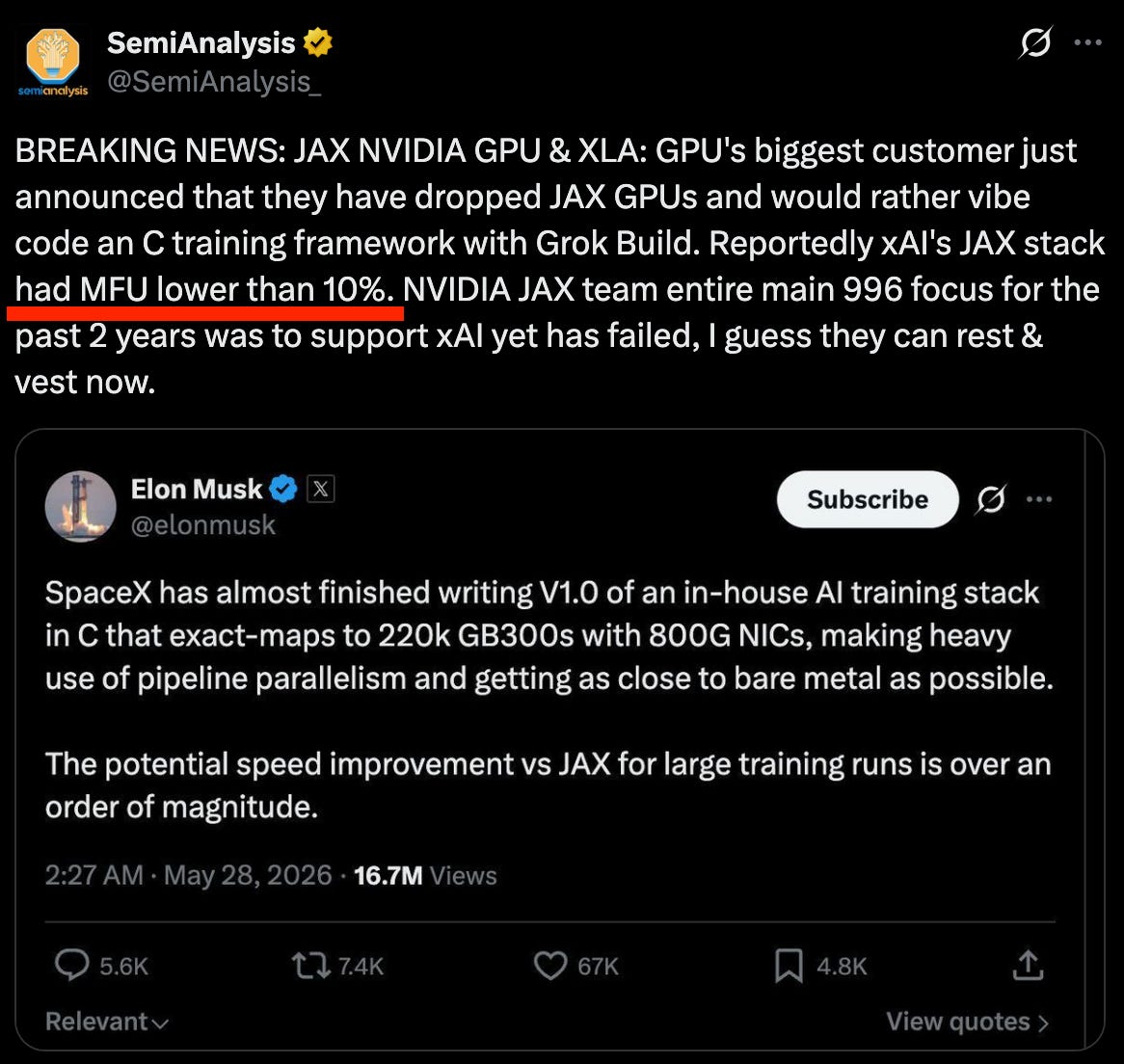
Anjney Midha Discusses AI Infrastructure Bottlenecks and Optimization ⭐ 7
The podcast delves into the issue of low AI compute utilization (MFU), suggesting that the AI race is not just about GPU quantity but also system engineering challenges. Anjney Midha shares the vision of AMP Grid, aiming to improve compute utilization and emphasizing the importance of responsible infrastructure development for the community and environment.
Solar Power Surpassed Coal in US Electricity Generation for the First Time in May ⭐ 6
In May, solar power generation surpassed coal in the US electricity mix for the first time, becoming the third-largest source of electricity. Despite challenges like tariffs and approval delays, the growth potential of solar and battery storage remains significant, indicating an acceleration of the energy transition. This is of great importance to developers interested in the energy sector and related technology investments.
Social Media Buzz
Codex vs. Claude Code Scenario Selection ⭐ 8
Users share their experiences using Codex and Claude Code in different scenarios: Claude Code 4.6 Sonnet is recommended for writing, 4.8 for front-end web development, and it’s advised to call domestic models like Zhipu GLM-5.2 and Deepseek V4 Flash based on cost at any time.
Skill-creator Recommendation ⭐ 8.5
Users highly recommend Skill-creator developed by Teacher Yao, considering it more powerful than the official version and capable of producing 90-point Skills. This Skill integrates the official Claude Code source code from Anthropic and other model Skills, refined over a long period. The open-source address is github.com/yaojingang/yao.

ATPROTO and Instance Discussion ⭐ 7
A hot topic in discussions about ATPROTO (the technology used by Bluesky) is its difference from Mastodon’s concept of “instances.” Some argue that ATPROTO lacks independent instances like Mastodon, relying instead on Relays, sparking debate about its decentralized nature.
Java Project Valhalla Explained ⭐ 7
The introduction of Project Valhalla, particularly the implementation of Value Classes, is discussed in detail. While aimed at improving performance, some views suggest it poses challenges to code readability and consistency, requiring developers to adapt to new memory models and semantics.
DuckDB’s Powerful Performance Praised by Community Users ⭐ 7
Users in community discussions share their “superpower” experience with DuckDB, noting extremely fast query speeds even when handling large datasets. Comments generally consider DuckDB a “game-changer” for data analysis, capable of easily handling local data and even querying JSON files directly, catering to both small and large problems.
ClickHouse’s 10th Anniversary: Users Share Advantages and Applications ⭐ 7
On the occasion of ClickHouse’s 10th anniversary of open-sourcing, users share success stories of the database in performance (e.g., 5x improvement in storage and QPS), as an alternative to Elasticsearch, and as the core of observability stacks. Despite being overlooked early on as “Made in Russia,” it has now become a powerful tool for handling logs and analytical queries.
Making Espresso with Sound Waves Could Significantly Save Energy ⭐ 7
A study using sound waves to make espresso has the potential to reduce coffee brewing energy consumption by 75%. However, users have questioned the energy saving calculation method and practical applications, discussing factors like coffee flavor and equipment variables, suggesting it’s more applicable to industrial scenarios.
The “Zen” and Practice of Machine Learning Research ⭐ 6
The article explores the “Zen” of machine learning research, emphasizing patience, curiosity, and resilience. Users discuss the differences between Eastern and Western Zen and how different types of work (e.g., backend vs. ML) have different frequencies of success signals. It’s widely agreed that in a fast-paced culture, patience and perseverance in research are increasingly rare.