06-07-Daily - AI Hot Daily
AI Hot Daily 2026/6/7
Daily curated AI + indie dev news
Today’s Summary
Zero-trust principle needed for AI Agent security
AI assistants prioritize Mac platform support
Claude Opus LLM shows superior frontend aesthetic
AI Technology & Products
Cursor Supports In-Browser UI Markup ⭐ 8.5
Cursor IDE’s new Design Mode allows users to update UI interfaces directly in the browser through annotations, pointing, or voice commands. This feature integrates visual editing, code editing, and AI assistance, aiming to significantly boost UI adjustment efficiency and shorten the distance from design to code. For frontend developers, this can reduce a lot of trial-and-error and manual adjustment work.

Google Launches Agentic RAG ⭐ 8
Google has released Agentic RAG, a multi-agent RAG system capable of handling complex enterprise queries. Unlike traditional single-step RAG, Agentic RAG can determine if enough information is available and iteratively retrieve information until all necessary details are complete, even performing multi-step reasoning across multiple data sources. This greatly improves the accuracy and reliability of responses.

Zero-Trust Security for AI Agents ⭐ 8
Anthropic has published a white paper emphasizing the need for enterprises to adopt zero-trust security principles when deploying autonomous AI agents. As AI models accelerate the vulnerability discovery and exploitation cycle, and agents can perform multi-step operations autonomously, traditional perimeter security is no longer sufficient. The zero-trust concept needs to be extended to the agent architecture itself to counter low-cost attacks and new security threats.

Claude Becomes a Chemist ⭐ 8
Anthropic is collaborating with chemists to enhance Claude’s performance in the field of chemistry. The initial results demonstrate Claude’s capability in analyzing NMR spectra, with performance comparable to or even exceeding specialized NMR software. It can also perform reverse analysis, providing strong support for chemical research.

Discussion on Mac-First AI Applications ⭐ 7.5
Some have noticed that many AI applications prioritize Mac support. Reasons include the fact that many AI developers use Macs, the early adopter base tends to be Mac users, and the unified interfaces of the Mac ecosystem (like Raycast and Rewind) are more suitable for AI assistant development. The advent of M1 chips has also made local model execution feasible.
Codex Supports Code Review ⭐ 7.5
Codex has introduced a code review feature where users can comment on AI-generated code changes. These comments are directly attached within the conversation and provided as context for the agent to process. This allows independent developers to have finer control over AI-generated code and ensure its quality.

Claude Opus 4.8 Outperforms GPT-5 in Aesthetic Appeal ⭐ 7
In a subjective ranking of LLM frontend aesthetics, Claude Opus 4.8 was considered superior to GPT 5.5, particularly excelling in design-related tasks. This suggests that Claude might be a better choice when pursuing visual appeal and user experience.
Claude Design Tips ⭐ 7
Tips are shared on Claude Design’s product design philosophy, practical daily tips, and Claude’s operational interactions. These tips cover design principles like the essence of interaction, font pairing, and the art of whitespace, as well as life hacks like cleaning a microwave and removing gum, and advanced Claude usage like voice control and intelligent image recognition.
Vibe Coding’s Poor Naming ⭐ 7
The article suggests that the name “Vibe Coding” might evoke the idea of AI generating subpar code. It emphasizes that the future mainstream will involve humans directing AI to write code. Programmers’ roles will shift towards Tech Leads, responsible for task decomposition, architecture selection, and code review, with less manual coding. It’s recommended to adapt to directing AI coding and to design and review carefully.

OpenAI Launches Lockdown Mode ⭐ 7
OpenAI has launched ChatGPT’s Lockdown Mode, designed to prevent data theft by restricting outbound network requests. While it cannot prevent prompt injection itself, it effectively cuts off attackers’ avenues for data exfiltration, providing enhanced security for users, especially those handling sensitive data.
Meta Admits Vulnerabilities in AI Chatbot ⭐ 6
Meta has confirmed that thousands of Instagram accounts were compromised due to the abuse of its AI chatbot, leading to full account control. Meta admitted this was due to a bug in the password reset verification process. Affected users have been notified, but hackers gained access to all account information, including private messages.
AI Industry’s “Black Friday” ⭐ 6
The article suggests that the AI industry might be in a worse state than commonly believed, with significant market value drops and stock declines for several AI-related companies recently. It also characterizes the “investment” in OpenAI as a “bailout,” questioning its business model and potential geopolitical implications for the industry.

Indie Dev & SaaS
Founder’s Time Waste ⭐ 7
The article argues that the biggest waste of a founder’s time is seeking advice from other founders, as everyone’s experience is unique. True value lies not in others’ experiences, but in identifying problems and improving products based on user feedback.
Seedance 2.0 is Ahead of the Curve ⭐ 6
A brief update from the author stating that Seedance 2.0 is “too far ahead,” possibly implying that its technology or design is ahead of current market demand or acceptance.

X Revenue vs. Exposure Comparison ⭐ 6
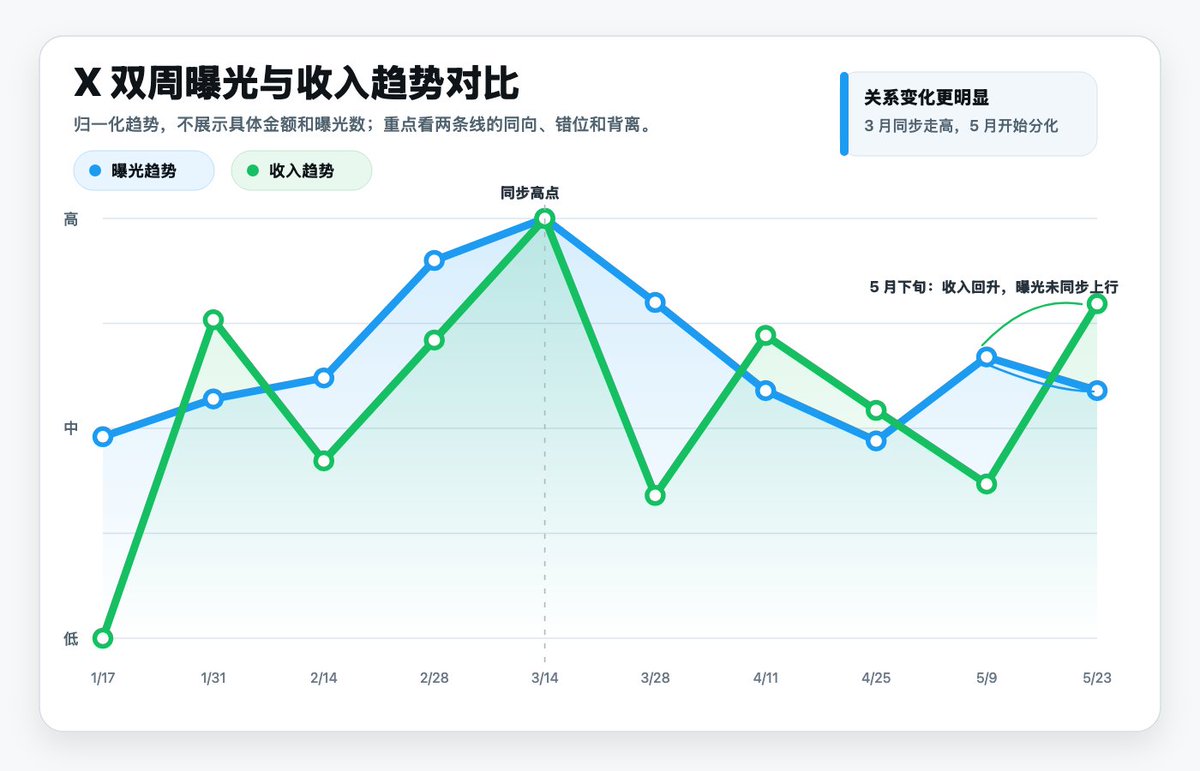
The blogger shares a comparison of revenue and exposure data on the X platform (formerly Twitter) over the past six months. It was observed that revenue increased during periods of lower exposure, possibly indicating changes in the platform’s algorithm or user interaction patterns.
Open Source Projects
micropython-wasm 0.1a2 Released ⭐ 7
micropython-wasm has released version 0.1a2, which includes a CLI command-line interface. Inspired by a draft blog post, it aims to better illustrate the “Try it yourself” section. This project focuses on running MicroPython in the WebAssembly environment.
Zeroserve: eBPF Scripted Web Server ⭐ 7
Zeroserve is a zero-configuration web server that can be scripted using eBPF. Designed as an alternative to Nginx and Caddy, its core innovation lies in shifting away from traditional declarative configuration. It allows users to control server behavior through eBPF programs, offering new flexibility.
Hermes Agent Desktop Supports Chinese ⭐ 7
Hermes Agent Desktop now supports Chinese. Although not yet complete, the project will continue to contribute PRs to improve localization and fix related bugs, offering a better user experience for Chinese speakers.

Industry News
HN Community Views on AI ⭐ 8
Users on Hacker News are discussing the generally negative sentiment towards AI, with concerns that AI-generated code is of low quality and introduces technical debt. However, some argue that execution speed is becoming increasingly important, and AI-assisted development can significantly improve efficiency. The community’s divided stance on AI reflects broader societal discussions. Another comment suggests AI threatens programmers’ lifestyles and work models.
GenAI’s “Oh Shit” Moments ⭐ 8
Hacker News users share their “oh shit” moments, transitioning from initial underestimation of GenAI to astonishment at its capabilities. These experiences include AI successfully fixing complex software issues, decompiling device firmware, and diagnosing home appliance malfunctions, showcasing AI’s unexpectedly powerful performance in practical applications.
Google Pays SpaceX Billions ⭐ 7
Google will pay SpaceX $920 million per month for compute resources. This deal is seen as a clever financial maneuver between Google and SpaceX, potentially significantly boosting SpaceX’s valuation and profitability. The transaction also sparks discussions about the reasonableness of SpaceX’s valuation and competition in AI infrastructure.
AI Agent Security Considerations ⭐ 7
Discussions highlight the growing importance of AI agent security, necessitating the adoption of zero-trust principles. AI accelerates attack cycles, and traditional security measures are insufficient. Furthermore, the autonomy of AI agents introduces new attack vectors, requiring security to be considered from the design stage, with security maturity as a key factor.
AI-Driven Code Reviews and Contributions ⭐ 6
The article explores the potential impact of AI-generated PRs (Pull Requests) on open-source projects. While AI can rapidly increase contribution volume, its motivation might be to optimize resume metrics rather than genuine project commitment. This places an additional burden on open-source maintainers and could lead to a disconnect between community effort and actual value.
JAX Backend and Device Management ⭐ 6
The author shares experiences with CUDA out-of-memory issues when handling large datasets in JAX and discusses JAX’s multi-backend and device management mechanisms. By using the jax.default_device context manager, they successfully loaded large data into CPU memory, resolving GPU memory limitations.
Social Media Buzz
How LLMs Actually Work ⭐ 8
This article delves into the workings of LLMs, emphasizing their simple autoregressive Transformer architecture, which achieves revolutionary results through immense model scale. It also points out that LLMs can only generate forward and may “lie” to maintain coherence, explaining how RLHF helps models address this issue.
How to Avoid Delivering Low-Quality RL Environments ⭐ 7
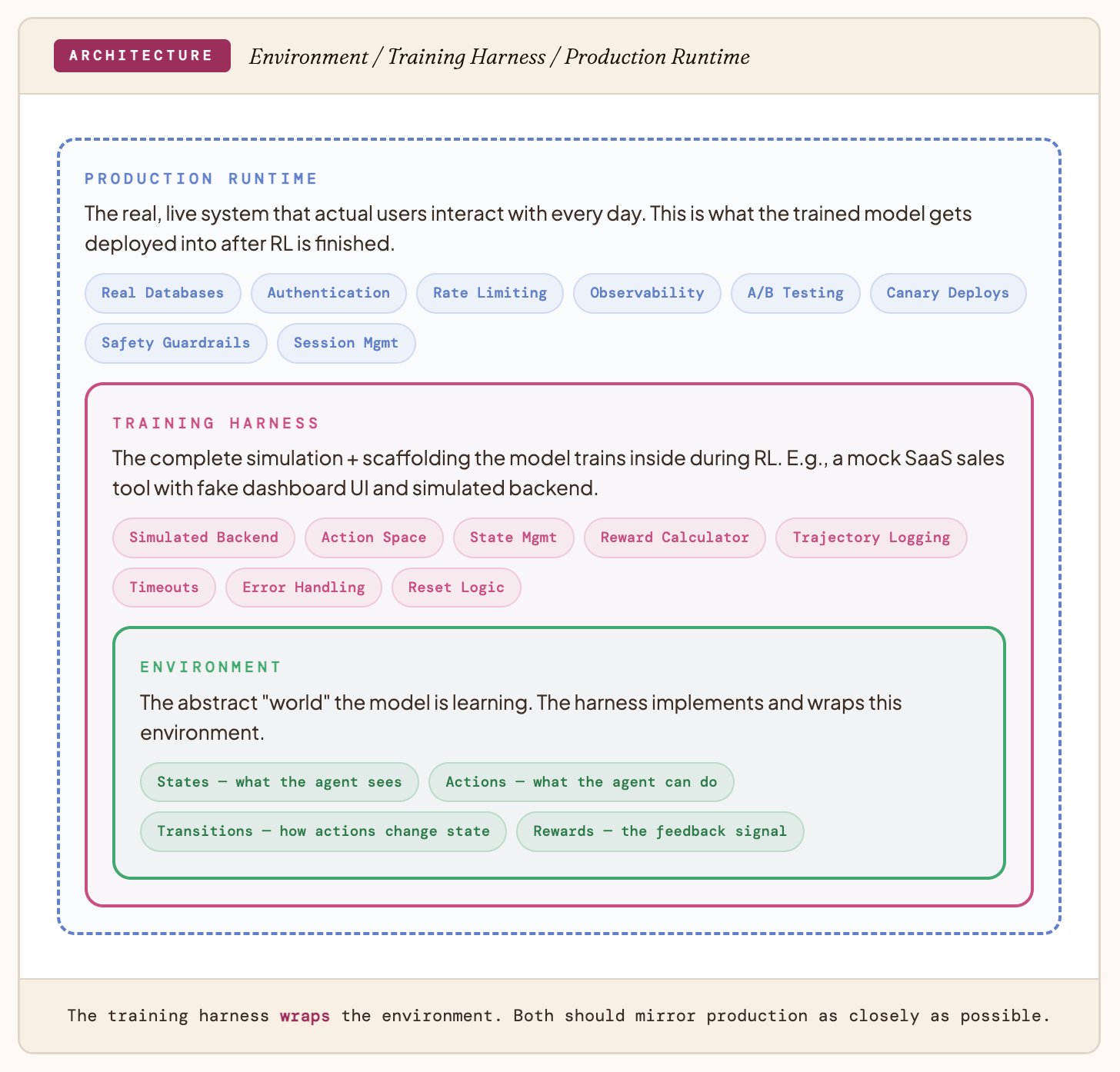
From a practitioner’s perspective, this article lists common failure cases in RL environments (harnesses), such as Stale Cache and Reward Hack, and analyzes how these issues can poison training data, leading models to learn incorrect behaviors. The article stresses the importance of environment quality and suggests embracing traditional software engineering best practices to improve RL environments.
Illustrated Skill E-book and GitHub Repo ⭐ 7
The author shares the GitHub repository for “Illustrated Skill,” which includes content to be copied and pasted from the book, even containing Skills the author had not previously open-sourced, such as a Skill for generating interview transcripts from podcasts. This theoretically allows readers to access the relevant content without purchasing the book.

The Mac-First Phenomenon in AI Applications ⭐ 7.5
Someone raises the question of why many AI applications prioritize Mac support. Analysis suggests this is related to AI developers themselves using Macs, the early adopter base being concentrated in the Mac ecosystem, and the uniformity of Mac system interfaces for listening, understanding, and invoking, which are crucial for AI assistants. The advent of M1 chips further strengthens Mac’s advantage in local AI model execution.
Subjective Aesthetic Ranking of AI Agents ⭐ 7
The blogger shares a subjective ranking of LLM frontend aesthetics, where Claude Opus 4.8 received the highest rating, outperforming models like kimi 2.6 and GPT 5.5. This reflects potential differences in the aesthetic perception capabilities of models in graphical interface and user experience design.

Non-Euclidean Geometry Note-Taking App ⭐ 6
This showcases “poincake,” an infinite canvas note-taking tool that uses the Poincaré disk model of hyperbolic geometry to organize notes. The tool leverages LLMs to overcome early challenges in non-Euclidean mathematics, offering a unique and visually appealing way to organize information, particularly suitable for knowledge graph visualization.